How to Maintain Your Drainage Stack and Avoid Blockages
Drainage stack maintenance is easy to ignore because the pipes stay hidden inside walls and shafts. However, a blocked stack can cause slow drains, bad smells and even overflow. Repairs also become costly when plumbers have to break walls or floors. Therefore, a few simple habits can save you a lot of money and trouble.
What Is a Drainage Stack?
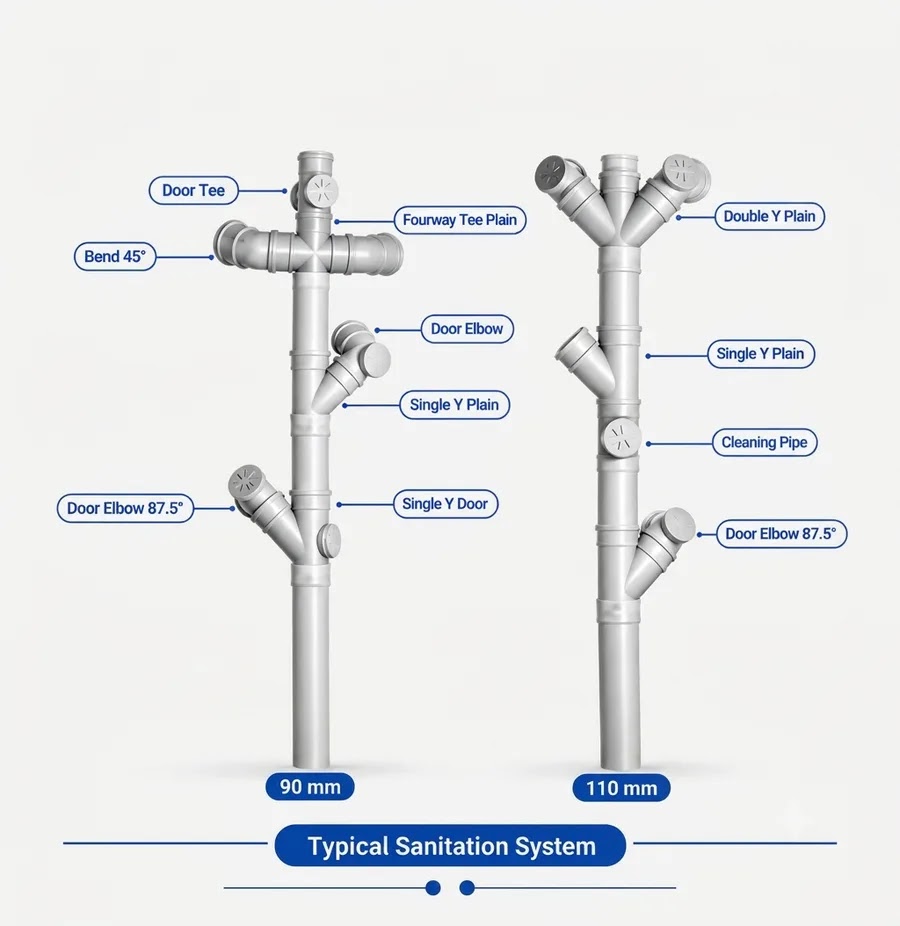
A drainage stack is the main vertical pipe in an SWR (Soil, Waste and Rain water) system. It carries wastewater and soil from every floor down to the sewer or septic tank. Branch pipes from bathrooms and kitchens join the stack through fittings such as Single Y, Double Y and Door Tee. Most homes and buildings use 90 mm or 110 mm pipes for this purpose. The larger size usually serves the main soil line. As a result, choosing the right size at the planning stage helps the whole system work smoothly.
Common Causes of Drainage Blockages
Blockages rarely happen overnight. Instead, they build up slowly over weeks or months. Kitchen grease is a common cause, because it cools inside the pipe and sticks to the walls. Similarly, hair and soap scum collect in bathroom drains and narrow the pipe. In addition, people often flush wipes, sanitary products and thick tissue. These items do not break down in water, so they settle at bends and junctions. Construction debris, such as cement and sand, can also stay inside new pipes and cause trouble later. Design problems matter too. For example, sharp 90° turns slow the flow, and a poor slope lets solids settle. Consequently, a weak layout can cause repeated blockages even when users are careful.
Warning Signs of a Blocked Drainage Stack
You can often spot a problem early. First, notice whether water drains slowly in more than one fixture. Next, listen for gurgling sounds from drains or toilets. These sounds usually mean that air cannot move freely through the pipes. Bad smells in bathrooms or near the pipe shaft are another clear sign. Likewise, water backing up in a lower-floor drain after someone uses an upper-floor fixture points to a blocked stack. Finally, damp patches on walls near the shaft may indicate a leak or overflow. Act quickly if you see any of these signs.
Simple Drainage Stack Maintenance Habits
Good habits keep your pipes clean and reduce the need for repairs. First, use strainers in bathroom and kitchen drains to catch hair and food waste. Also, never flush wipes, cotton or sanitary products. Put them in the dustbin instead. Next, handle kitchen grease carefully. Wipe greasy pans with tissue and throw it away rather than washing the grease down the sink. In addition, pour hot water down kitchen and bathroom drains once a week. This helps clear soap and light grease build-up. Be careful with strong chemical cleaners. They can damage joints and rubber rings over time. For minor slow drains, a plunger or a bio-enzyme cleaner is a safer choice.
Keep the Vent Pipe Clear
The vent pipe at the top of the stack lets air enter the system. Because of this air, water flows freely and drains do not gurgle. However, leaves, bird nests and debris can block the vent opening. Therefore, check the vent pipe regularly, especially before and after the monsoon. A clear vent keeps the whole drainage stack working properly.
Why Cleaning Access Fittings Matter
A well-designed stack includes access points for cleaning. Fittings such as the Door Tee, Door Elbow, Single Y Door and Cleaning Pipe have removable covers. As a result, a plumber can clear a blockage with a rod or jetting tool without cutting the pipe. Blockages usually start at bends and junctions. For this reason, placing access fittings at these points makes future maintenance quick and inexpensive. Moreover, it protects your walls and floors from unnecessary damage.
Cleansing Pipe with Door
Single Y with Door
S Trap
Design Choices That Prevent Blockages
Maintenance starts at the planning stage. For example, Y-shaped fittings guide the flow more smoothly than sharp 90° junctions. Similarly, 45° bends and 87.5° door elbows change direction gently, so solids do not settle at the turn. In addition, keep a proper slope on horizontal branches. Choose the correct pipe size for the load as well. Finally, use quality ISI-certified pipes with ring-fit joints for leak-free connections.
Vent Cowl
Door Elbow 87.5°
Cross Tee with Door
Single Y
When to Call a Professional
Call a plumber if the blockage returns after cleaning. Do the same if several fixtures are affected at once, or if you notice leaks and persistent smells. Repeated problems often point to a slope or design issue. In that case, a proper fix works better than another quick clean.
Regular drainage stack maintenance keeps your system working for many years. First, keep solids and grease out of the drains. Then, clean the drains weekly and keep the vent pipe clear. Finally, make sure your stack has access fittings for easy inspection. With these steps, you can avoid most blockages and expensive repairs. Explore the Star SWR range of pipes and fittings for reliable drainage in homes and buildings.
What is the difference between ring-fit and solvent cement joints?
A ring-fit joint uses a rubber ring in the socket to make a sealed connection. It is quick to fit and allows slight movement when the pipe expands or contracts. A solvent cement joint is glued, which makes a fixed bond that cannot easily be taken apart. Ring-fit is often preferred for drainage because it is easy to install and can be undone for repairs.
What is the difference between SWR pipes and water supply pipes?
SWR pipes carry wastewater out of a building by gravity and are not made for pressure. Water supply pipes bring clean water in under pressure and have different wall thickness, joints and fittings. Never use one in place of the other.
How do I choose the right SWR pipe size for my building?
Most homes and buildings use 90 mm or 110 mm pipes. The 110 mm size usually serves the main soil line, and the 90 mm size serves smaller branches and stacks. The right size depends on the number of fixtures and the load, so confirm it at the planning stage with your plumber or engineer.
Can SWR pipes be used underground?
SWR pipes are not designed for heavy soil or traffic loads, so they are not the right choice for most buried lines. They can sometimes be used for short, shallow runs close to the building, but use underground drainage pipes for deeper trenches, driveways and long outdoor lines. If you are not sure, ask your plumber or engineer before you install.
What is the difference between a Single Y and a Double Y?
A Single Y lets one branch pipe join the stack at an angle. A Double Y lets two branches join at the same point, so it suits two fixtures that sit close together. Both guide the flow more smoothly than a sharp 90° tee.
What is the difference between a Door fitting and a Plain fitting?
A Plain fitting, such as a Single Y Plain, has no cleaning cover. A Door fitting, such as a Single Y Door, Door Tee or Door Elbow, has a removable cover. This lets a plumber clear a blockage with a rod or jetting tool without cutting the pipe.