


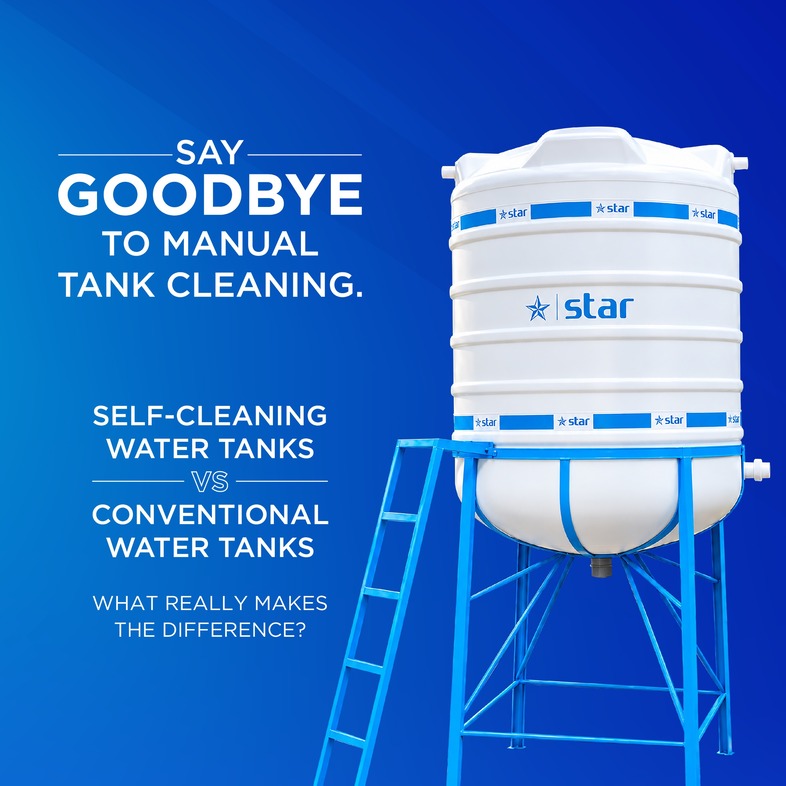
Self-Cleaning vs. Conventional Water Tanks: What Really Makes the Difference?
Water tanks are essential for reliable water storage, but not all tanks offer the same approach to cleanliness and maintenance. While conventional tanks remain widely used, self-cleaning tanks are designed to make water storage more convenient and hygienic. In this article, we compare self-cleaning and conventional water tanks to understand their key differences and what makes one more suitable for your needs.
Conventional Water Tanks: The Traditional Approach
Conventional water tanks have been a common choice for residential and commercial water storage for decades. Their primary purpose is straightforward: to store water safely for everyday use. Available in different capacities and materials, these tanks can be used for a wide range of applications.
However, since the water remains stored for extended periods dust, sediment, algae and other impurities can gradually accumulate inside the tank, particularly when the tank is exposed to heat, moisture and changing environmental conditions. This makes periodic inspection and manual cleaning important for maintaining proper hygiene.
Cleaning a conventional tank typically involves emptying the tank, accessing the interior and manually removing accumulated deposits. Depending on the surroundings and usage, this may need to be done regularly. While conventional tanks continue to serve their basic storage purpose effectively, their maintenance requirements are an important factor to consider when choosing a water storage solution.
Self-Cleaning Water Tanks: A Smarter Approach to Storage
Self-cleaning water tanks are designed to address one of the common challenges of conventional water storage, the accumulation of dirt and deposits inside the tank.
Rather than relying entirely on frequent manual cleaning, these tanks incorporate a specially designed internal structure that helps reduce the build-up of impurities.
The self-cleaning mechanism helps minimise the accumulation of sediment, dirt and other deposits, supporting cleaner water storage over longer periods. This can also make routine tank maintenance more convenient by reducing the extent of manual cleaning required.
For homes and buildings where water is stored for extended periods, a self-cleaning tank can offer a more practical approach to maintaining the storage environment. By combining effective water storage with a design focused on easier maintenance, self-cleaning tanks provide a modern alternative to conventional water tanks.
How Does a Self-Cleaning Water Tank Work?
A self-cleaning water tank uses a specially designed internal piping system to keep the cleaning process simple and efficient. At the base of the tank, a four-way PVC pipe arrangement is installed to control the movement of water inside the tank.
As water enters the tank, this arrangement creates a controlled rotational flow, causing the water to circulate along the walls and floor of the tank. This movement helps loosen and lift accumulated sediment, dust and fungal deposits, guiding them towards the bottom outlet.
Once the impurities settle at the outlet point, the cleaning process is simple. Just open the ball valve manually to flush the accumulated impurities out through the outlet. This eliminates the need to climb inside the tank for manual scrubbing, making routine tank maintenance considerably easier.
With its integrated cleaning mechanism, a self-cleaning water tank offers a more convenient approach to maintaining the tank interior while keeping the cleaning process quick and hassle-free.
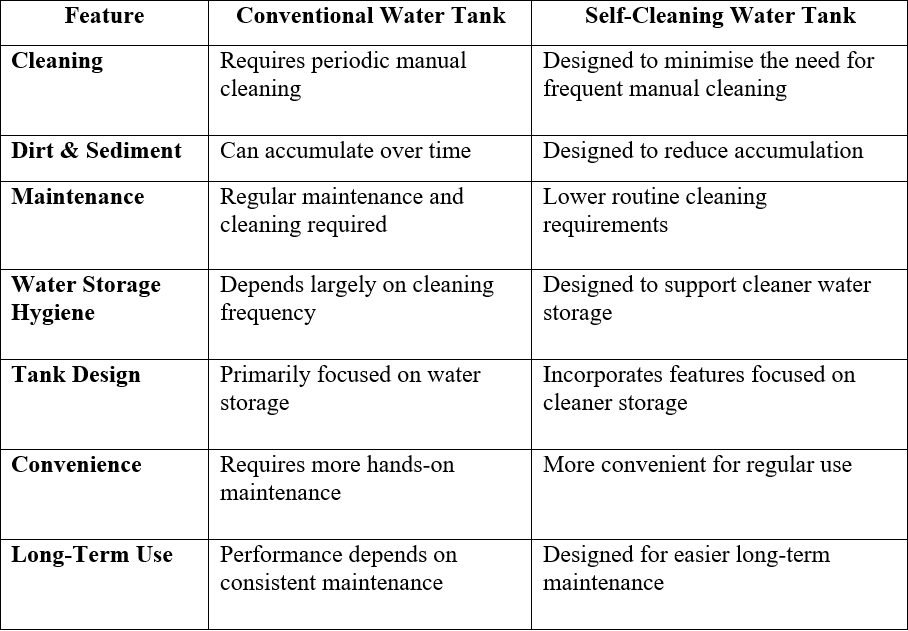
Self-Cleaning vs. Conventional: Key Differences
A Smarter Choice for Water Storage
The right water tank is not just about capacity; it is also about choosing a solution that fits the way water is stored and maintained. Conventional tanks may fulfil the basic need for storage, but newer solutions offer added convenience for everyday use.
Star Pipes & Fittings brings self-cleaning technology to water storage with options available in both high-quality plastic and stainless steel. Built to offer a more convenient alternative to conventional tanks, these self-cleaning models are suited for homes, commercial spaces and other water storage requirements.
Upgrade Your Water Storage Today. Choose Star Self-Cleaning Water Tanks.
FAQs
1. How often should a water tank be cleaned?
The frequency depends on usage and surroundings, but regular inspection and cleaning are recommended for proper maintenance.
2. Can a self-cleaning tank be used for drinking water storage?
Yes, provided the tank is suitable for potable water storage and is maintained properly.
3. Which is better for a house: plastic or stainless-steel water tanks?
Both can be suitable. The choice depends on factors such as durability, installation conditions, capacity and budget.
4.Does a self-cleaning water tank need to be cleaned manually?
No. It helps reduce the accumulation of dirt and sediment, but periodic inspection is still advisable
5. What should I consider before buying a water tank?
Consider the tank’s material, capacity, durability, installation space, and water usage and maintenance requirements.